

Quick answer
The São Miguel whale watching season runs from April through October, with May and June offering the highest probability of multiple-species encounters. Resident sperm whales appear year-round in the deep channels south of the island, while migratory baleen whales—including fin, sei, and blue whales—pass through during spring and early summer. Sea conditions stabilize after March, and tours operate daily from Marina Portas do Mar between 09:00 and 18:00 throughout the active months.
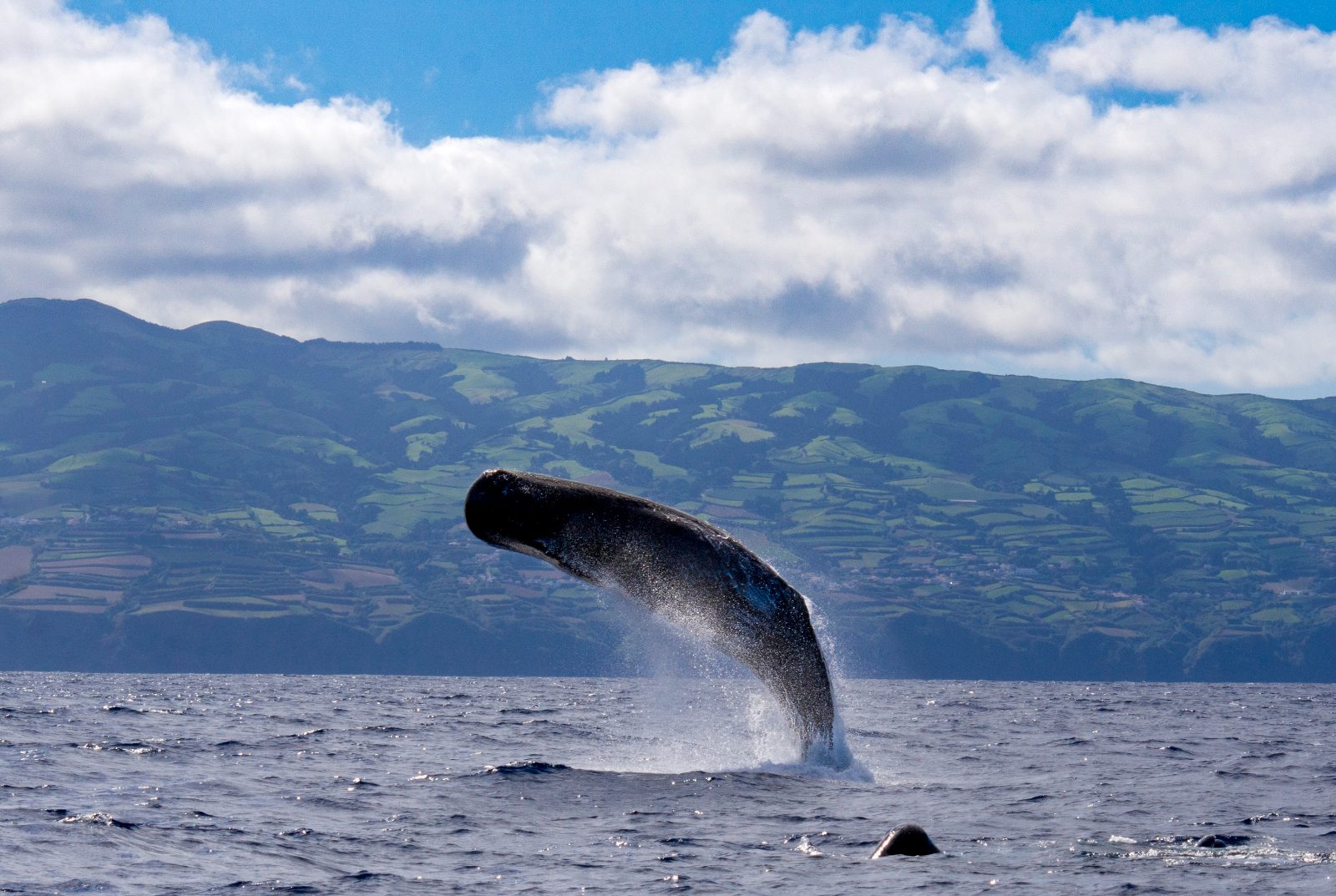
Sperm whales occupy the submarine canyons off São Miguel's southern coast every month of the year, making the Azores one of fewer than a dozen places globally where deep-diving cetaceans can be observed reliably regardless of season. The resident population numbers roughly 200 individuals, and sightings occur on more than 95 percent of tours during calm weather. Migratory species follow the North Atlantic Current between their Arctic feeding grounds and equatorial breeding areas, creating a narrow window when diversity peaks. Blue whales—the largest animals ever to exist—appear most frequently in late April and early May. Fin whales arrive in March and remain visible through June. Sei whales overlap with both, their presence concentrated in May. Common and bottlenose dolphins patrol the coastal shelf year-round, often riding bow waves within minutes of departure from Ponta Delgada. Ocean conditions shape the São Miguel whale watching season as much as animal behavior does. Winter swells and frequent low-pressure systems make offshore navigation difficult between November and March, and most operators suspend service during these months. April marks the transition: sea state moderates, visibility improves, and the spring bloom draws plankton-feeding species into accessible waters. By May, eight-meter swells become rare, and tours run on schedules that accommodate both morning and afternoon departures. Timing a visit around cetacean migration requires trade-offs. Peak season—May and June—delivers the greatest species variety but also the highest tour demand. July and August guarantee calm seas and near-certain sperm whale encounters, though migratory baleen whales have largely moved north by then. September and early October extend the window with stable conditions and reduced crowds, but sighting diversity declines as the season closes. The resident population ensures that no month within the operational calendar is a true gamble, only a shift in which species dominate the log.
“Sperm whales occupy the submarine canyons off São Miguel's southern coast every month of the year, making the Azores one of fewer than a dozen places globally where deep-diving cetaceans can be observed reliably regardless of season.”
Understanding the São Miguel Whale Watching Season for Sightings
The prime window for whale watching in São Miguel spans from April to October, coinciding with the migration patterns of diverse cetacean species. During these months, calmer sea conditions and increased food availability maximize the probability of sightings.
April to June
Moderate visitor volumeMild, 16°C to 20°C; variable winds
Blue whales and fin whales frequently pass through during their spring migration.
July to September
High seasonal tourismWarm, 20°C to 25°C; calm seas
Resident species like sperm whales are consistently sighted alongside warmer water migrants.
October
Lower visitor densityCooling, 18°C to 22°C; occasional rain
This period offers a final opportunity for sightings as weather transitions into winter patterns.
Verdict: For the highest probability of diverse sightings and stable conditions, target the period between May and September.
Daily Operational Hours for São Miguel Whale Watching Season
Tour operators at Marina Portas do Mar maintain consistent daily operational hours throughout the whale watching season to accommodate scheduled departures.
| Monday | 09:00–18:00 | |
|---|---|---|
| Tuesday | 09:00–18:00 | |
| Wednesday | 09:00–18:00 | |
| Thursday | 09:00–18:00 | |
| Friday | 09:00–18:00 | |
| Saturday | 09:00–18:00 | |
| Sunday | 09:00–18:00 |
Fees and Pricing for São Miguel Whale Watching Season Tours
Access to the Marina Portas do Mar area is provided at no cost. Actual tour participation fees are established independently by local whale watching operators.
Visitors do not pay an entry fee to the marina, though individual tour prices vary based on the specific operator selected.
Arriving for Your São Miguel Whale Watching Season Trip
Whale watching departures are located at the Marina Portas do Mar in Ponta Delgada, São Miguel. The site is centrally positioned along the waterfront and is accessible by road or on foot from the city center.
Follow signs for Ponta Delgada harbor to Marina Portas do Mar
Drop-off at Marina Portas do Mar entrance
Walk along the Avenida Infante Dom Henrique towards the marina
Essential Preparation for the São Miguel Whale Watching Season
Prepare for open-ocean conditions and local booking requirements before your tour departs.
-
Book your tour in advance
-
Operators run scheduled departures and spaces fill quickly during peak months.
-
Bring layered waterproof clothing
-
Atlantic weather changes rapidly; wind chill on deck drops temperatures even in summer.
-
Pack motion sickness medication
-
Swells in open water affect most passengers; take medication 30 minutes before departure.
-
Wear non-slip closed-toe shoes
-
Decks become wet and slippery during transit and whale approaches.
-
Carry photo ID or passport
-
Operators verify passenger details at check-in for maritime safety logs.
-
Arrive 15 minutes before departure
-
Safety briefings and gear distribution occur before scheduled tour times.
Check availability
Common Questions About São Miguel Whale Watching Season
Everything you need to know about são miguel whale watching season